

Guide: leash training a puppy
Leash Training a Puppy: From First Harness to Loose Leash
Leash training a puppy can start the day they come home, indoors, well before the first real walk. Walking politely on a leash is a learned skill, not an instinct. So keep sessions short, reward your puppy for staying near you, and expect months of practice rather than days.
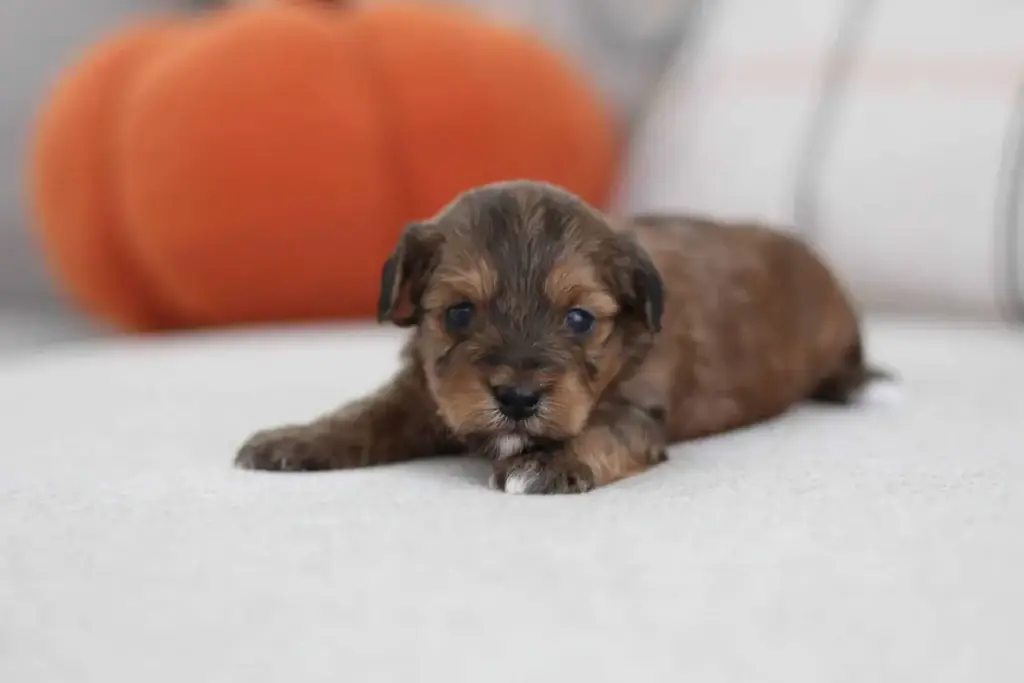
When to start leash training a puppy
The American Kennel Club (AKC) recommends starting as soon as you bring your puppy home (AKC). You do not need to wait for vaccines to finish, because the first lessons happen in your house and yard.
For public places, follow your vet’s advice. See when puppies can go outside.
Gear for leash training a puppy
- A light, 6-foot leash. Both the AKC and VCA Animal Hospitals advise against retractable leashes.
- A well-fitted collar or harness. The AKC recommends a front-clip harness for large puppies, since it makes pulling easier to redirect.
- Small, soft treats. VCA suggests keeping treats under 10 percent of the day’s calories.
For small breeds, a harness has another advantage, because it keeps pressure off the throat. See collapsing trachea in dogs for why that matters.
Leash training a puppy step by step
- Wear it first. Let your puppy wear the collar or harness, and then a light leash, for short spells indoors with treats and play.
- Teach a marker. Say “yes” and give a treat, until the word clearly means a reward is coming.
- Reward attention. With the leash on, mark and treat every time your puppy looks at you.
- Add a cue. Say “let’s go”, take a few steps, and reward your puppy beside you. Reward every few steps at first.
- Practice turns and check-ins. Call your puppy’s name when they reach the end of the leash, and reward them for coming back.
- Move outside. Start in the yard, then try a quiet street, and bring better treats.
The steps follow the AKC’s method. VCA suggests starting with walks of 5 to 10 minutes (VCA).
What to do when your puppy pulls
According to the AKC, pulling usually means the puppy has not been told what you do want. So make the right choice obvious:
- Reward your puppy generously for walking next to you.
- Give a cue before you change direction.
- Stop moving forward while the leash is tight, and go again when it slackens.
- Add “sniff walks”. The AKC suggests letting your puppy choose the route and sniff freely several times a week, because a puppy whose needs are met pulls less.
Leash chewing and refusing to walk
Chewing the leash. The AKC’s advice is to get your puppy’s attention with a treat, ask for “drop”, and praise the release. In addition, keep less slack in the leash, so there is less to grab.
Sitting down and refusing. Never drag a puppy. Instead, check that the harness fits and does not rub. Then go back to an easier place, and reward a few steps at a time. A puppy that suddenly balks at things it used to ignore may be in a normal fear period.
How long leash training a puppy takes
The AKC says most dogs need several months of regular practice to walk reliably on a loose leash. That is normal, so short daily sessions beat a long weekly one.
Walks should also match your puppy’s age and size. See how much exercise a puppy needs.
Related guides
- Crate Training a Puppy: A Step-by-Step Guide
- Potty Training a Small Breed Puppy: A 30-Day Plan With Crate Training
- Goldendoodle Training: A Puppy Plan That Works
- Puppy Biting: Why They Do It and How to Stop It
- Puppy Jumping Up: How to Teach a Polite Greeting
- Resource Guarding in Puppies: Signs, Prevention and Help
See all our puppy guides, or meet our Havapoo puppies for sale and Goldendoodle puppies for sale.
Sources
- American Kennel Club. How to Teach a Puppy to Walk on a Leash. akc.org
- VCA Animal Hospitals. Dog-Walking and Leash Training Tips. vcahospitals.com
Sources were checked on October 7, 2026.
Looking for a Goldendoodle puppy?
Our Goldendoodles are born and raised inside our family home in Eagle Mountain, Utah, from health-tested parents. See who is available now.