

Guide: when can puppies go outside
When Can Puppies Go Outside? A Safe Timeline
When can puppies go outside? Into your own yard from day one, and into busy public places once the vaccine series is finished at about 16 weeks. In between, there is a safe middle ground. Puppies need to see the world during these weeks, so the goal is to avoid germs, not to avoid life.
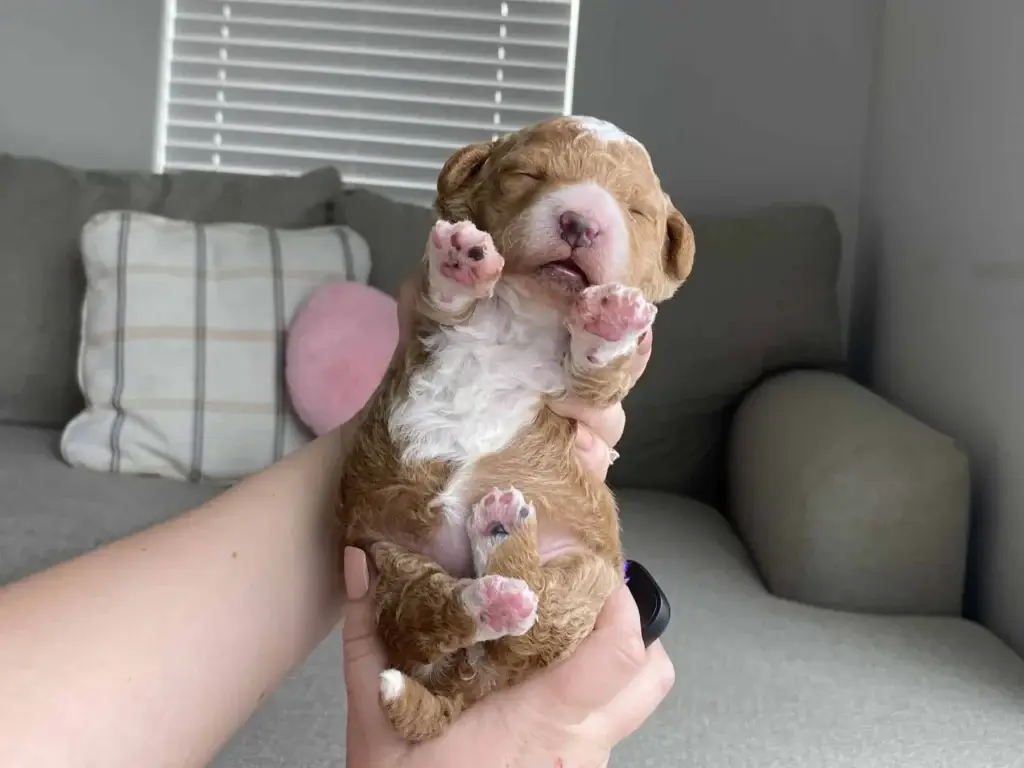
When can puppies go outside? The short timeline
| Stage | Where the puppy can go |
|---|---|
| From 8 weeks, at home | Your own yard, if no sick or unvaccinated dogs have used it. Outings in your arms or a carrier. Car rides. |
| After the first vaccines | Homes of friends with healthy, vaccinated dogs. A clean puppy class that requires vaccines. |
| After the final vaccine, at about 16 weeks | Sidewalks, parks and pet-friendly stores, once your vet gives the go-ahead |
Vaccines are usually given at 6 to 8, 10 to 12 and 14 to 16 weeks. See our puppy vaccine schedule.
Why the wait: parvovirus
The main reason is canine parvovirus. According to the American Veterinary Medical Association (AVMA), puppies between 6 and 20 weeks old are at the greatest risk (AVMA).
The virus spreads through the feces of infected dogs, and it travels on shoes, paws and hands. It is also tough. Cornell University’s canine health center notes that it can survive indoors for at least two months and outdoors for months or even years (Cornell). Therefore, ground where many unknown dogs have been is the thing to avoid.
Places puppies can go outside safely before vaccines are finished
- Your own yard.
- Friends’ homes and yards, when their dogs are healthy and fully vaccinated. The American Kennel Club says this is a safe way to socialize a young puppy.
- Anywhere, in your arms. Carry the puppy through a garden center, or sit on a bench and watch the world.
- The car. Short, happy rides count as outings.
- A good puppy class. Choose one with a clean floor and a vaccine requirement.
Places to avoid for now
- Dog parks
- Pet store floors
- Highway rest stops
- Sidewalks and lawns used by many dogs
- Shelters, kennels and daycare
The AVMA also advises caution with groomers and classes until the series is complete, so ask each one about its vaccine and cleaning rules.
Why not keep the puppy at home until 16 weeks?
Because the best window for socialization closes at about three months. The American Veterinary Society of Animal Behavior says puppies should meet new people, places and friendly animals before they are fully vaccinated, in ways that keep the risk of illness low. It warns that behavior problems, not infections, are the leading cause of death in dogs under three (AVSAB).
In other words, a puppy raised in isolation is trading one risk for another. See our puppy socialization checklist.
Potty breaks when puppies cannot go outside yet
If you have no private yard, set up an indoor potty spot with pads or a patch of real grass on a balcony. Then move the spot outdoors once the vaccines are finished. See potty training a small breed puppy.
Our puppies go home with their first vaccinations done. Ask your vet at the first vet visit what is safe in your neighborhood.
Related guides
- New Puppy Supplies: The Checklist You Actually Need
- How Much Exercise Does a Puppy Need? A Guide by Age
- Puppy Schedule: A Daily Routine by Age
- Puppies and Children: Safety Rules for a Happy Home
- Introducing a Puppy to a Cat: A Calm Five-Step Plan
See all our puppy guides, or meet our Havapoo puppies for sale and Goldendoodle puppies for sale.
Sources
- American Veterinary Medical Association. Canine parvovirus. avma.org
- Cornell University College of Veterinary Medicine. Parvovirus: Transmission to treatment. vet.cornell.edu
- American Kennel Club. When Can Puppies Meet Other Dogs?. akc.org
- American Veterinary Society of Animal Behavior. Position Statement on Puppy Socialization. avsab.org
Sources were checked on October 7, 2026. This article is general information and does not replace advice from your veterinarian.
Ready to meet your puppy?
Our puppies are born and raised inside our family home in Eagle Mountain, Utah, from health-tested parents. See who is available now, or ask us a question.