

Guide: puppy schedule
Puppy Schedule: A Daily Routine by Age
A puppy schedule is a simple daily rhythm of potty breaks, meals, play and naps. Young puppies thrive on it, because they learn what happens next. The American Kennel Club suggests taking a puppy out after every change of activity, feeding at set times and building in plenty of naps. Here are sample routines by age.
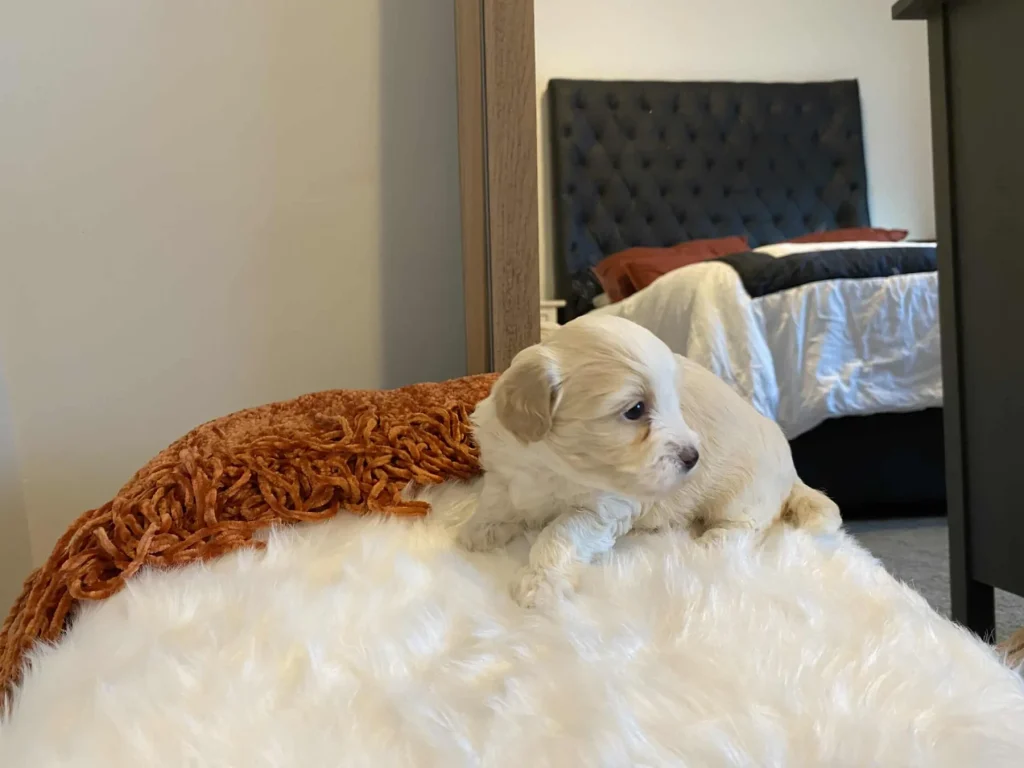
Why a puppy schedule works
Routine does three jobs at once. First, it speeds up housetraining, because the puppy is in the right place when it needs to go. Second, it protects sleep. Third, it makes a puppy calmer, since nothing in the day is a surprise.
The American Kennel Club (AKC) builds its sample day around one idea: every change of activity is followed by a trip outside (AKC).
A sample puppy schedule at 8 weeks
| Time | Activity |
|---|---|
| First thing | Straight outside to potty, then a few minutes of play |
| Breakfast | Meal, then outside again within a few minutes |
| Mid-morning | Short play or training, potty, then a nap in the crate or pen |
| Midday | Potty, lunch, potty, play, then another nap |
| Mid-afternoon | Potty, a small meal for toy and small breeds, play, nap |
| Early evening | Potty, dinner, potty, family time |
| Before bed | Calm time, last potty trip, then into the crate |
| Overnight | One or two quiet potty trips |
Adjust the clock times to your household. The order matters more than the hour.
How the puppy schedule changes at 12 and 16 weeks
- 12 weeks. Awake periods get longer and naps fewer. Most puppies need only one night-time trip, and some need none.
- 16 weeks. The vaccine series is usually finishing, so real walks and a puppy class join the day. According to the AKC, most puppies sleep through the night by about four months.
Small breeds can drop from four or five meals to four, and later to three. See our puppy feeding schedule.
The building blocks
- Potty. After waking, eating, drinking and playing. For a very young puppy that can mean every 45 minutes while awake.
- Meals. Offer food at set times, and lift the bowl after about 15 minutes.
- Naps. Puppies sleep 18 to 20 hours a day. See how much puppies sleep.
- Play. Several short sessions are better than one long one.
- Training. Five to ten minutes at a time is plenty.
Fitting a puppy schedule around work
A schedule still works when you are out for part of the day, as long as someone covers the midday block. A lunch visit, a walker or a neighbor keeps the rhythm going. See working full time with a puppy.
In addition, write the routine down and put it on the fridge. Then everyone in the house does the same thing.
Common mistakes
- Free feeding. A bowl that is always full makes potty times unpredictable.
- Skipping naps. An overtired puppy bites and races around.
- Too much freedom. Unsupervised roaming leads to accidents.
- A late, exciting evening. Rough play before bed makes for a restless night. See our plan for the first night with a new puppy.
Related guides
- New Puppy Supplies: The Checklist You Actually Need
- Puppy Vaccine Schedule and Deworming: What Is Done Before Go-Home and What Comes Next
- Puppy Feeding Schedule for Small Breeds: How Often and How Much by Age
- First Vet Visit for a Puppy: What to Expect and What to Bring
- Puppies and Children: Safety Rules for a Happy Home
See all our puppy guides, or meet our Havapoo puppies for sale and Goldendoodle puppies for sale.
Ready to meet your puppy?
Our puppies are born and raised inside our family home in Eagle Mountain, Utah, from health-tested parents. See who is available now, or ask us a question.